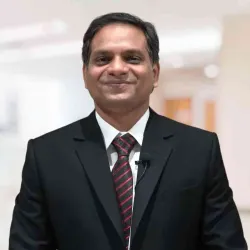
Global NRI → India Liver Transplant Corridor
Structured Medical Migration with Hepatology Governance
Led by Dr. Chetan Kalal
DM Hepatology | First DM Hepatologist of Maharashtra
Based in Mumbai
Why International Families Choose India for Liver Transplant
India has one of the world’s largest living donor liver transplant (LDLT) ecosystems, with:
High procedural volumes
Advanced surgical expertise
Structured ICU care
Established transplant protocols
For many NRI and international families, India offers:
Faster transplant timelines
Living donor flexibility
Comprehensive medical teams
Long-term affordability with quality
The difference is coordination.
Without structured medical oversight, transplant travel becomes fragmented.
The Corridor Model
Dr. Chetan Kalal functions as hepatology lead across the entire migration pathway.
Phase 1: Pre-Travel Risk Assessment (Remote)
For patients in:
United States
United Kingdom
United Arab Emirates
Singapore
Canada
Australia
New Zealand
Includes:
Complete record audit
MELD-Na modelling
Transplant eligibility confirmation
Donor feasibility review
Travel fitness assessment
Patients travel only after strategic clearance.
Phase 2: India-Based Transplant Coordination
Upon arrival in Mumbai:
Hospital selection alignment
Recipient evaluation oversight
Donor safety pathway supervision
Prehabilitation optimization
Surgical scheduling coordination
Surgery is handled by the transplant surgical team.
Hepatology strategy remains centralized.
Phase 3: Post-Transplant Stabilization in India
ICU course monitoring
Immunosuppression planning
Complication mitigation
Discharge stabilization
Fitness-for-travel reassessment
Return travel is timed medically — not emotionally.
Phase 4: International Aftercare Governance
After returning abroad:
Virtual graft monitoring
Lab review scheduling
Immunosuppression adjustment
Infection risk guidance
Long-term metabolic protection
Continuity prevents graft attrition.
Why This Model Works for NRIs
Eliminates fragmented opinions
Reduces last-minute travel panic
Protects donor safety
Ensures surgical timing is appropriate
Maintains continuity after return
This is not medical tourism.
It is structured transplant migration.
Ideal Candidates for the Corridor
NRI families with living donors
Patients facing long transplant waitlists abroad
HCC cases within transplant criteria
Decompensated cirrhosis requiring timely intervention
Post-transplant patients seeking long-term oversight
Geographic Anchor
Primary hepatology base: Mumbai
Mumbai offers:
International connectivity
Advanced transplant centres
Multidisciplinary ICU support
High LDLT volume programs
Strategic Positioning
India is not positioned as “lower cost.”
India is positioned as:
High-volume.
Technically mature.
LDLT-strong.
Hepatology-governed.
Consultation Pathway
🌐 drchetankalal.com
🌍 Global Virtual Eligibility Assessment
📍 India-based transplant coordination upon approval
Closing Line
“When transplant requires crossing borders, strategy must precede travel.”
Transparent cost range comparison (US vs UK vs India)
Expected timeline from first consult to surgery
Structured donor checklist download
FAQ targeting: “Is liver transplant safe in India?”
A dedicated NRI case coordinator contact channel
Because corridor positioning works only when it removes uncertainty.
Now tell me —
Do you want to weaponize this into a full NRI landing funnel with lead capture strategy?