Liver Transplant Program
Advanced Recipient Evaluation, Surgical Coordination & Long-Term Graft Care
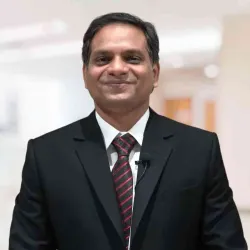
Led by Dr. Chetan Kalal – DM Hepatology (First in Maharashtra)
When Is Liver Transplant the Right Decision?
Liver transplant is not a last-minute emergency act.
It is a timed, risk-calculated intervention.
Dr. Chetan Kalal evaluates transplant candidacy in patients with:
Decompensated cirrhosis
Acute-on-chronic liver failure (ACLF)
Hepatocellular carcinoma within transplant criteria
Refractory ascites
Recurrent variceal bleeding
Recurrent hepatic encephalopathy
MELD score progression
Chronic liver failure with declining quality of life
The decision is never emotional.
It is score-based, physiology-based, and survival-based.
Structured Transplant Pathway
Phase 1: Advanced Hepatology Stabilization
Before transplant listing, we optimize:
Ascites control
Nutritional rehabilitation
Sarcopenia correction
Infection screening
Portal hypertension management
Renal protection strategy
A weak patient does not survive transplant.
Optimization is non-negotiable.
Phase 2: Recipient Evaluation
Comprehensive assessment includes:
MELD-Na calculation
Cardiac clearance
Pulmonary evaluation
HCC staging (if applicable)
Frailty scoring
Psychosocial evaluation
Financial counselling pathway
Every transplant candidate is risk-stratified.
Phase 3: Donor Evaluation (Living Donor Pathway)
India predominantly performs living donor liver transplant (LDLT).
Evaluation includes:
Blood group compatibility
Liver volumetry
Vascular anatomy mapping
Donor fitness screening
Ethical clearance protocol
Safety of the donor is absolute priority.
Multidisciplinary Coordination
Dr. Kalal functions as the hepatology lead coordinating with:
Transplant surgeons
Critical care specialists
Interventional radiology
Onco-hepatology teams
Nutrition & physiotherapy teams
The transplant is one day.
The hepatology oversight is lifelong.
Post-Transplant Authority
Transplant success is not discharge from ICU.
It is 5-year graft survival.
Post-transplant management includes:
Immunosuppression strategy design
Tacrolimus monitoring
Rejection surveillance
Infection risk mitigation
Renal function preservation
Metabolic syndrome control
Long-term malignancy surveillance
Many centers focus on surgery.
Few focus on lifelong graft protection.
That is where hepatology leadership matters.
Second Opinion for Transplant Decisions
Patients approach for second opinions when:
“You need transplant immediately.”
“You are not eligible.”
“Cancer excludes you.”
“Your MELD is too low.”
“You are too old.”
Dr. Kalal re-evaluates:
Transplant timing
Alternative medical salvage
Downstaging options in HCC
Risk-benefit modelling
Bridge-to-transplant strategies
Not all urgent transplants are urgent.
Not all rejected patients are ineligible.
International & NRI Transplant Consults
Structured virtual transplant evaluation for patients from:
United States
United Kingdom
United Arab Emirates
Singapore
Canada
Australia
New Zealand
Middle East & Europe
Includes:
Record review
Imaging reassessment
Transplant candidacy guidance
Cost & timeline counselling
Post-return aftercare planning
Geographic Access – Western India
Primary practice: Mumbai
Access network across:
Navi Mumbai
Thane
Nashik
Nagpur
Indore
Who Should Seek Immediate Transplant Evaluation?
Red Flag Indicators:
Ascites requiring repeated tapping
Variceal bleed history
Recurrent encephalopathy
Bilirubin persistently rising
HCC diagnosis
MELD >15
ACLF episode
Progressive muscle wasting
Delay reduces survival.
Clinical Positioning Statement
This is not a marketing transplant program.
This is structured hepatology leadership in transplant medicine.
When transplant is inevitable, timing is everything.
When transplant is avoidable, intervention is decisive.
Appointment & Structured Transplant Evaluation
🌐 drchetankalal.com
📍 In-person consults: Mumbai
🌍 Global Virtual Transplant Evaluation Available
“Transplant is not the end of liver disease.
It is the beginning of graft responsibility.”