Fatty liver can remain quiet while inflammation and scarring develop, so feeling well does not prove that the liver is safe. By identifying the stage of disease and addressing weight, exercise, blood sugar, cholesterol, alcohol, medicines, and other causes, you can reduce the drivers of damage and know when specialist treatment is needed.
Key takeaways
- Treat insulin resistance, alcohol exposure, and other causes to reduce ongoing liver injury.
- Normal liver enzymes do not rule out fibrosis or cirrhosis.
- Fibrosis assessment determines how closely your liver needs monitoring.
- Advanced fibrosis requires specialist care, surveillance, and a personalised treatment plan.
How fatty liver can become permanent liver damage
Fat in the liver is not the same as permanent damage. Simple steatosis means excess fat without significant injury, and it often improves when metabolic drivers are addressed. In some people, ongoing insulin resistance, alcohol exposure, or another liver insult triggers inflammation, producing MASH (metabolic dysfunction-associated steatohepatitis) and starting fibrosis progression.
| Stage | What is happening | Can treatment reverse it? |
|---|---|---|
| Simple steatosis | Fat accumulates, with little or no scarring | Often reversible with sustained lifestyle and metabolic changes |
| MASH | Fat is accompanied by inflammation and injured liver cells | Inflammation can improve; untreated injury can advance to scarring |
| Fibrosis | Repair tissue builds up and distorts liver structure | Early fibrosis can regress; advanced fibrosis needs specialist monitoring |
| Cirrhosis | Extensive scarring reduces blood flow and liver function | Scarring is usually not fully reversible; treatment can prevent complications |
| Decompensated cirrhosis | Jaundice, fluid build-up, bleeding, or confusion develops | Damage can become life-threatening and may require transplant evaluation |
The amount of fat on a scan is less important for long-term risk than the degree of fibrosis. Treatment can halt or slow further scarring through weight reduction, exercise, diabetes and cholesterol control, alcohol avoidance, and review of liver-harming medicines.
Selected adults with noncirrhotic MASH and moderate-to-advanced fibrosis may qualify for resmetirom alongside diet and exercise; it is not a general treatment for uncomplicated fatty liver.
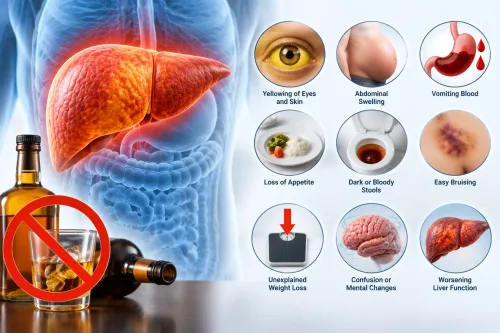
Seek urgent care for jaundice, vomiting blood, black stools, new abdominal swelling, confusion, or marked sleepiness.
How doctors find liver damage when symptoms and enzymes are misleading
A normal ALT and AST do not rule out meaningful liver damage. Doctors combine blood tests, imaging, medical history, and fibrosis risk scores because symptoms can remain absent until disease is advanced.
| Test | What it can show | Limitation |
|---|---|---|
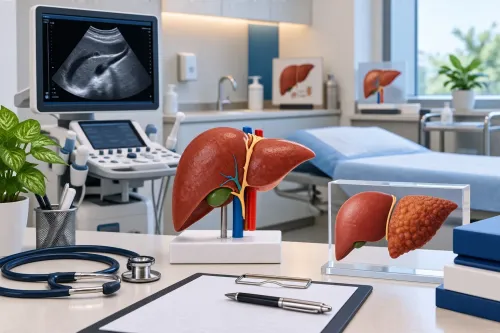
| Ultrasound | Fat in the liver and signs such as an enlarged or irregular liver | It cannot reliably show inflammation or early scarring; a normal scan does not exclude disease |
| ALT and AST | Liver-cell injury and changing enzyme activity | Both can remain normal in MASH or advanced fibrosis, and improvement does not prove that scarring has reversed |
| FIB-4 score | Fibrosis risk calculated from age, AST, ALT, and platelet count | It is a screening tool, not a diagnosis; below 1.3 is usually low risk under age 65, while 1.3 or higher needs further assessment. The common threshold after age 65 is about 2.0 |
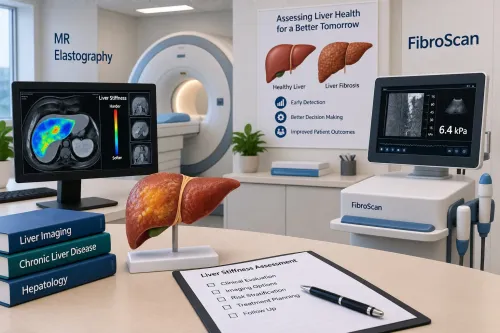
| Elastography | Liver stiffness, which helps estimate fibrosis | Stiffness also rises with inflammation, congestion, or recent food intake, so results need context |
| Hepatitis testing | Viral hepatitis B or C as another or additional cause of injury | It identifies a cause, not the amount of scarring |
| Liver biopsy | Inflammation, fat-related injury, and fibrosis in sampled tissue | It is invasive and a small sample can miss uneven disease |
Elastography or MRI-based testing is often the next step after a raised FIB-4. Fibrosis stage predicts future complications more reliably than the amount of fat alone, so do not treat reassuring enzymes as proof that the liver is safe.
The treatment targets that reduce ongoing liver injury
Sustained, measurable changes—not a brief fluctuation—reduce ongoing liver injury. The largest benefit comes from combining weight reduction with better insulin sensitivity, healthier food, regular activity, and little or no alcohol.
| Change | Measurable target | Why it matters |
|---|---|---|
| Weight | Lose 3%–5% to reduce liver fat; aim for 7%–10% for inflammation; more than 10% offers the best chance of fibrosis improvement | Benefit rises with sustained loss; crash diets can be harmful and are hard to maintain |
| Food | Follow a Mediterranean-style diet; replace sugary drinks, refined carbohydrates, and saturated fats with water, fibre-rich foods, and unsaturated fats | Lowers calorie intake, liver fat, and cardiometabolic risk |
| Exercise | Complete at least 150 minutes exercise weekly, or 75 minutes of vigorous activity, plus resistance training | Improves insulin sensitivity and liver fat even without weight loss |
| Alcohol | Avoid alcohol, especially when fibrosis, inflammation, or alcohol-related injury is present | Removes an additional source of liver injury |
| Metabolic health | Bring blood glucose, HbA1c, blood pressure, triglycerides, and LDL cholesterol toward clinician-set targets | Reduces the metabolic stress that drives liver fat and cardiovascular harm |
Choose a plan you can repeat for months rather than pursuing rapid loss. Review diabetes, cholesterol, and blood-pressure treatment with your clinician; improving these numbers supports the liver but does not replace weight and activity changes. A dietitian can adapt the eating plan to your culture, budget, and medical conditions.
When medicines, specialist review, or another diagnosis changes the plan
Clinicians do not label fatty liver from an ultrasound alone. They take a non-judgmental alcohol history covering amount, frequency, binge episodes, and recent change, then check cardiometabolic risks such as type 2 diabetes, obesity, hypertension, and dyslipidaemia. They also review medicines, viral hepatitis tests, iron studies, and other causes.
Normal ALT or AST does not rule out important fibrosis.
| Cause | Clues clinicians weigh | Treatment implication |
|---|---|---|
| MASLD | Steatosis plus metabolic risk, without another dominant cause | Weight, exercise, metabolic control, and fibrosis staging |
| Alcohol-associated liver disease | Alcohol exposure sufficient to explain injury, with or without metabolic risk | Alcohol cessation and assessment for alcohol-use disorder |
| Mixed causes | Meaningful alcohol exposure alongside metabolic dysfunction | Address both; alcohol avoidance becomes especially important with fibrosis |
Ask a hepatologist to reconcile conflicting findings. Dr Chetan Kalal Hepatologist Transplant can help determine whether non-invasive fibrosis tests are enough or whether biopsy is needed when the cause or stage remains uncertain.
Medicines or procedures fit defined situations:
- Continue a statin when indicated for cardiovascular risk; fatty liver alone is not a reason to stop it.
- Consider resmetirom with diet and exercise only for adults with noncirrhotic MASH and moderate-to-advanced fibrosis, after specialist staging. It is not a treatment for uncomplicated steatosis or decompensated cirrhosis.
- Consider bariatric surgery for selected patients with obesity after multidisciplinary assessment; cirrhosis, especially decompensation, changes operative risk and usually rules out routine weight-loss surgery.
Related services
Fatty Liver Disease Fatty liver disease is identified by the existence of excessive fat in the liver. View service → |
"Follow-up Care" or "Chronic Disease Management Regular monitoring for patients with chronic liver conditions. Service Type for Regular Monitoring of Chronic Liver Conditions 1. View service → |
What changes after advanced fibrosis or cirrhosis is found
Improved ALT or AST does not erase advanced scarring. Fibrosis—not the amount of fat seen on imaging—is the stronger predictor of future liver-related complications, and established cirrhosis can progress to liver failure or cancer even after lifestyle changes reduce ongoing injury. Normal enzymes do not reliably exclude clinically important disease.
- Continue cirrhosis surveillance with liver cancer screening, usually an ultrasound every six months. A normal scan today does not remove the need for the next one.
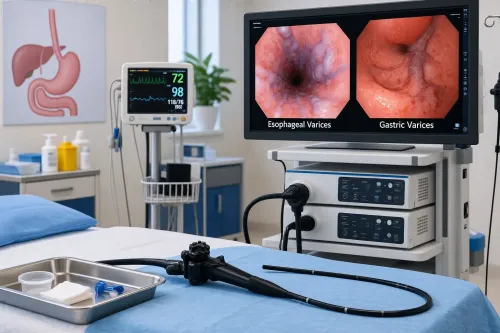
- Ask how portal hypertension is being assessed. Your team may use platelet counts, liver stiffness measurements, or an upper endoscopy to look for varices that could bleed.
- Seek emergency care for vomiting blood, black stools, new or rapidly increasing abdominal swelling, jaundice, confusion, or marked sleepiness. These can signal decompensation, not a routine enzyme fluctuation.
- Arrange prompt specialist review when advanced fibrosis is confirmed, when results worsen, or when symptoms appear. Discuss liver transplant evaluation if liver failure or decompensated cirrhosis develops; further weight-loss advice alone is not enough at that stage.
Continue weight, diabetes, cholesterol, alcohol, and medication management because they can slow additional injury. They do not replace surveillance, and improving a blood test does not make advanced disease low-risk.
Frequently asked questions
Can fatty liver become permanent liver damage?
Yes. Ongoing metabolic dysfunction, alcohol exposure, or another liver insult can cause inflammation and fibrosis, which may progress to cirrhosis.
Can liver damage exist when liver enzymes are normal?
Yes. Liver enzymes can appear normal despite fibrosis or advanced liver disease, so doctors use medical history, blood tests, imaging, and fibrosis assessment together.
Which treatment targets help reduce further liver injury?
Treatment focuses on the cause of liver injury, including metabolic risk factors, alcohol exposure, excess weight, diabetes, and other liver conditions.
What changes after advanced fibrosis or cirrhosis is diagnosed?
Care becomes more intensive, with specialist review, regular monitoring for complications and liver cancer, and treatment tailored to the stage and cause of disease.
Related services
Non Invasive Assessment Of Fatty Liver Fibroscan FibroScan: The Gold Standard for Non-Invasive Liver Assessment FibroScan (Transient Elastography) is an advanced, non-invasive diagnostic tool used... |
Chronic Liver disease The liver is essential for digesting food and clearing your body of toxic substances. Cirrhosis is when scar tissue supplants healthy liver tissue. View service → |
Preventive Health & Wellness Clinic (with sub-focus: Liver Health, Lifestyle Medicine, and Early Screening) Preventive Liver Health Check & Lifestyle Screening The Preventive Liver Health Check & Lifestyle Screening Program by Dr. View service → |