Jaundice, confusion, bleeding, severe vomiting and rapidly increasing abdominal swelling can signal complications that need hospital care, not a routine appointment. You will learn which symptoms require an emergency department, what an alcoholic hepatitis specialist checks, and how to prepare for liver disease treatment in Mumbai.
Key takeaways
- Go to emergency care for confusion, vomiting blood, black stools, or severe breathing difficulty.
- Jaundice alone cannot confirm alcoholic hepatitis; blood tests and imaging help identify the cause.
- Specialists use bilirubin, INR, creatinine, infection checks, and clinical scores to assess severity.
- Outpatient care is unsafe when you cannot eat, drink, take medicines, or remain alert.
Which alcoholic hepatitis symptoms need emergency care today?
For alcoholic hepatitis symptoms in Mumbai, use the nearest emergency department today when any red flag appears; do not wait for an outpatient slot. Alcoholic hepatitis can occur with or without known cirrhosis, and symptom intensity does not reliably measure liver injury.
| Urgency | Warning signs | What to do |
|---|---|---|
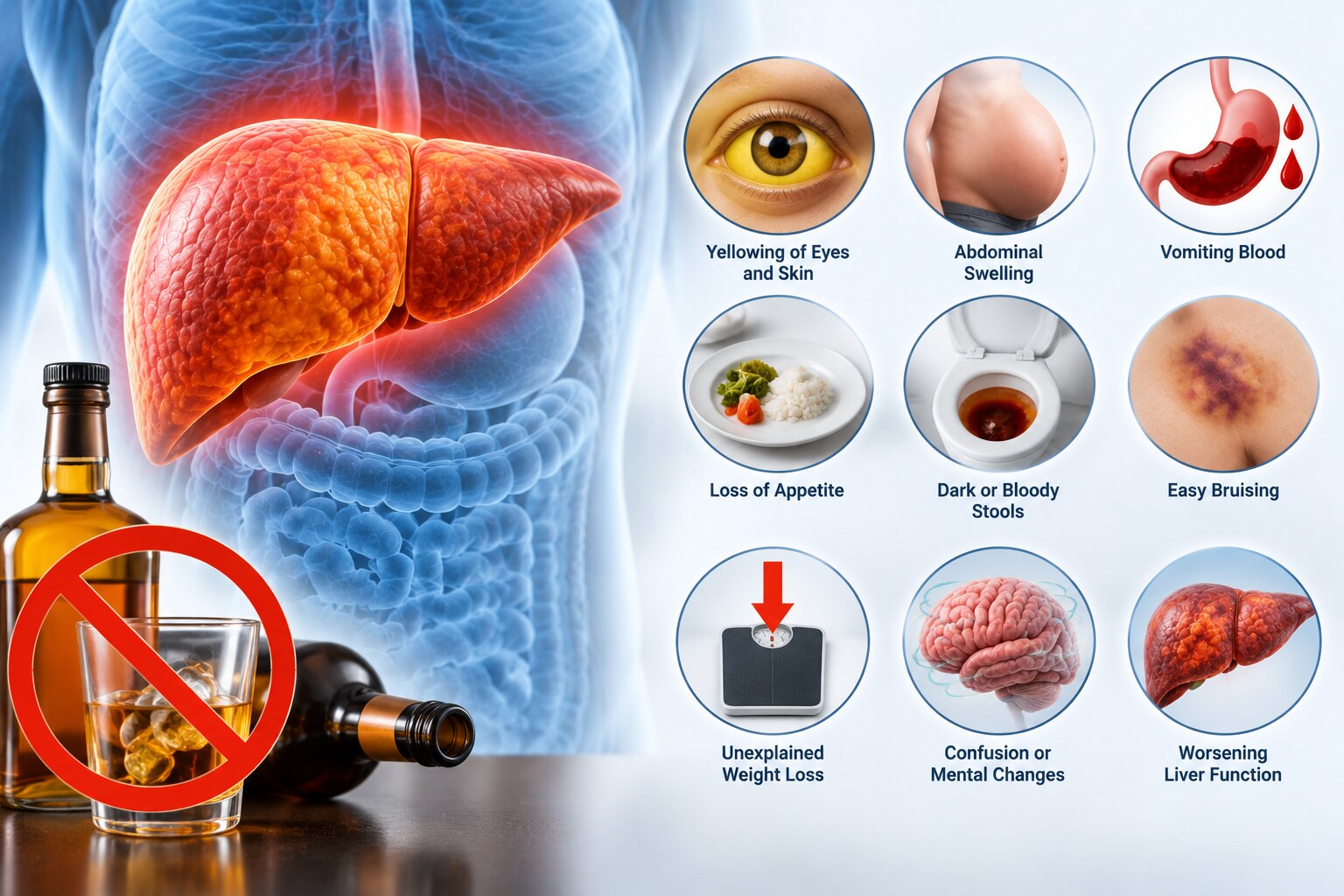
| Emergency today | Confusion, unusual sleepiness, vomiting blood, black tarry stools, fainting, severe breathing difficulty, rapidly increasing abdominal swelling, inability to keep fluids down, high fever, very low urine output, or severe abdominal pain | Arrange transport, stay with the person, and seek emergency care now |
| Prompt hepatology appointment | Jaundice, dark urine, pale stools, severe fatigue, appetite loss, nausea, fever, right-upper-abdominal pain, leg swelling, easy bruising, or unexplained weight loss | Book prompt assessment; worsening symptoms move this to emergency care |
These warning signs can indicate encephalopathy, gastrointestinal bleeding, infection, kidney injury, sepsis or dangerous fluid accumulation. Alcohol related liver disease can worsen quickly, even after previously normal liver tests.
While waiting for transport, keep the person supervised and record changes, including the time confusion, bleeding, vomiting or unsafe drinking began. Do not leave someone alone after confusion, bleeding or unsafe drinking appears. Take medication and supplement lists, recent blood tests or scans, discharge papers, and details of the usual alcohol intake and last drink.
A hepatology assessment is also important because complete alcohol cessation and treatment for alcohol-use disorder—not a liver tonic alone—are central to recovery.
How can alcoholic hepatitis be distinguished from other causes of jaundice?
Symptoms alone cannot confirm alcoholic hepatitis. An alcoholic hepatitis specialist looks for jaundice that began or worsened over days to weeks, heavy alcohol exposure, the last drink, withdrawal symptoms, fever, poor nutrition, bleeding, changes in mental status, abdominal fluid and previous liver disease.
These clues separate alcoholic hepatitis from other alcoholic hepatitis conditions and overlapping illnesses.
| Condition | Clues that point elsewhere |
|---|---|
| Alcohol withdrawal | Tremor, sweating, agitation, hallucinations or seizures after reducing alcohol |
| Acute viral hepatitis | Exposure history, marked enzyme elevation and positive viral testing |
| Drug-induced liver injury | New medicine, supplement or dose change |
| Pancreatitis | Severe upper-abdominal pain radiating to the back and high lipase |
| Gallbladder disease | Bile-duct dilation, colicky pain or a blocked stone |
| Fatty liver | Fat on imaging without the acute jaundice syndrome |
| Decompensated cirrhosis | Ascites, encephalopathy or bleeding with known longstanding liver disease |
Blood testing includes bilirubin, AST, ALT, alkaline phosphatase, albumin, prothrombin time or INR, complete blood count, kidney-function tests, electrolytes and infection testing. One AST or ALT result cannot prove alcoholic hepatitis or show that disease is mild.
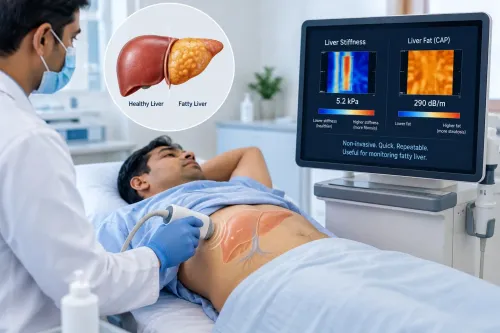
Abdominal ultrasound with Doppler examines the liver, bile ducts, portal circulation and ascites. Further imaging or endoscopy follows suspected obstruction or bleeding. Do not wait for results if confusion, bleeding, severe pain, fever or worsening jaundice appears. Liver biopsy is reserved for diagnostic uncertainty or an alternative diagnosis that would change treatment.
How do specialists measure severity and choose treatment?
Bilirubin shows how much bile is accumulating, while INR reflects impaired clotting-factor production. Creatinine signals kidney injury, sodium can fall with advanced liver dysfunction, and infection findings can turn a stable case into an admission. These results help specialists judge urgency across alcoholic hepatitis conditions; symptoms or one AST result cannot do that.
| Marker | Why it matters | Treatment or urgency |
|---|---|---|
| Bilirubin and INR | Show jaundice burden and impaired liver function | Support severity scoring and admission decisions |
| Creatinine and sodium | Reveal kidney stress and circulatory dysfunction | Increase concern for complications and mortality |
| Infection findings | Identify a trigger that steroids could worsen | Require targeted treatment before immunosuppression |
Clinicians may calculate the Maddrey discriminant function; a score of at least 32 identifies severe disease in commonly used protocols. MELD or MELD-Na also guides risk assessment, with MELD of at least 21 used in severe disease. Both require current laboratory results, not symptoms or a single enzyme value.
Treatment addresses alcohol related liver disease as a whole: complete abstinence, medically planned withdrawal, infection treatment, fluid-retention management, encephalopathy care and alcohol-use-disorder treatment. Nutrition targets about 35 kcal/kg/day and 1.2–1.5 g protein/kg/day when individually appropriate.
Prednisolone 40 mg daily for 28 days is reserved for selected severe cases after infection, uncontrolled gastrointestinal bleeding and severe kidney failure are assessed. Never self-start it. A Lille score after seven days identifies poor steroid response.
Heavy daily drinkers, especially people with previous withdrawal seizures, hallucinations or delirium, need medical advice before stopping abruptly because detoxification can require monitored or emergency care.
Which Mumbai service should you choose, and when is outpatient care unsafe?
Bleeding, confusion, sepsis signs, severe vomiting, breathing difficulty, kidney injury or rapidly expanding ascites make outpatient care unsafe. Go to the nearest emergency department in Mumbai, arrange transport if the person is weak or confused, and do not wait for an outpatient slot.
| Service | What it means | When it applies |
|---|---|---|
| Emergency department | Immediate assessment, blood tests, treatment and admission | Vomiting blood, black stools, confusion, unusual sleepiness, fainting, high fever, severe abdominal swelling or pain, inability to keep fluids down, breathing difficulty or very low urine output |
| General physician | Initial examination, medication review and referral | Stable symptoms without red flags; ask for same-day escalation if jaundice or test results are worsening |
| Hepatologist or gastroenterologist | Specialist liver assessment and complication management | Jaundice, abnormal INR, recurrent ascites, confusion, variceal bleeding, kidney dysfunction or rapidly worsening results |
| Addiction-treatment service | Withdrawal planning and alcohol-use-disorder treatment | Use alongside liver care, not instead of it; severe withdrawal needs monitored hospital detoxification |
| Transplant-capable hospital | Advanced organ-failure care and transplant-centre referral | Severe liver or kidney dysfunction, recurrent complications or deterioration despite treatment |
Before booking, ask whether the facility provides same-day blood tests, ultrasound, endoscopy, monitored detoxification, hospital admission and transplant-centre referral. This is essential when choosing liver disease treatment in Mumbai or an alcoholic hepatitis specialist.
For an appointment with Dr Chetan Kalal Hepatologist Transplant, bring scans, laboratory reports, discharge summaries, prescriptions, supplements, the last drink and usual quantity, withdrawal history, diabetes or kidney disease details, and a trusted person who can provide an accurate history.
Related service
Alcoholic hepatitis occurs when a person consumes more alcohol than the liver can process. Such a condition is treated by Alcoholic Hepatitis Specialist in Girgaon. View service → |
What does recovery require after the immediate warning signs settle?
Recovery depends on complete abstinence, not a liver tonic or willpower alone. Alcohol-use-disorder treatment—motivational or behavioural therapy and suitable medication—can make abstinence achievable. Fatty liver can coexist with fibrosis; alcoholic hepatitis can accelerate fibrosis and cirrhosis; cirrhosis can progress to ascites, encephalopathy, gastrointestinal bleeding and liver failure.
After discharge, arrange repeated blood tests, nutrition follow-up, and review of every prescription, over-the-counter drug and supplement. Monitor for:
- Relapse, withdrawal symptoms or unsafe drinking
- Fever, infection, worsening jaundice or vomiting
- Increasing abdominal swelling, leg swelling or rapid weight gain
- Confusion, unusual sleepiness or personality change
- Vomiting blood, black stools, fainting or very low urine output
- Kidney injury, dehydration or inability to keep fluids down
Return to hospital when these signs appear. Monitored detoxification is relevant for heavy daily drinkers, especially after withdrawal seizures, hallucinations or delirium; intensive care may be needed for severe withdrawal, sepsis, respiratory failure, uncontrolled bleeding or multiple-organ failure.
Ask when blood tests and clinic review are due, which symptoms require emergency care, and how nutrition and family supervision will work. If prednisolone was prescribed for selected severe alcoholic hepatitis, ask about infection screening, the 40 mg daily 28-day plan and Lille reassessment after seven days; never restart it independently.
For liver disease treatment in Mumbai, ask when transplant-centre evaluation becomes appropriate. Early transplantation can be considered when severe disease fails medical treatment. Assessment covers infection, cancer, psychosocial support, commitment to abstinence and relapse risk—not a fixed six-month sobriety rule alone.
Frequently asked questions
Which alcoholic hepatitis symptoms need emergency care today?
Go to the nearest emergency department for confusion, extreme drowsiness, vomiting blood, black stools, severe abdominal swelling, breathing difficulty, repeated vomiting, inability to drink, or rapidly worsening jaundice.
How can alcoholic hepatitis be distinguished from other causes of jaundice?
Doctors combine alcohol and medication history with examination, bilirubin and liver enzyme tests, blood counts, INR, kidney tests, infection screening, ultrasound, and selected viral or autoimmune tests.
How do specialists measure severity and choose treatment?
They assess jaundice, clotting, kidney function, infection, nutrition, alcohol withdrawal risk, and scores such as Maddrey’s discriminant function and MELD-Na before choosing monitoring or hospital treatment.
When is outpatient care unsafe for alcoholic hepatitis?
Outpatient care is unsafe when warning signs, dehydration, confusion, bleeding, infection, kidney injury, severe withdrawal risk, or inability to maintain food, fluids, and prescribed medicines is present.
What does recovery require after the immediate warning signs settle?
Recovery requires complete alcohol abstinence, nutritional support, follow-up blood tests, treatment of complications, vaccination and infection prevention, and ongoing care from a liver specialist.
Keywords