
Fatty liver disease is one of the fastest-growing liver health concerns worldwide, and India is no exception. Many people discover they have excess fat in their liver during a routine health check-up, even though they may not have any symptoms. While blood tests can indicate that the liver is under stress, they cannot accurately measure the amount of fat stored in the liver. This is where Controlled Attenuation Parameter (CAP) score analysis becomes valuable.
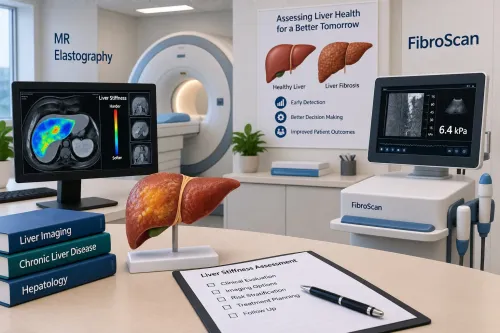
CAP score analysis is a non-invasive method performed during a FibroScan examination that helps estimate the amount of fat present in the liver. It provides healthcare professionals with additional information to diagnose and monitor fatty liver disease more effectively. For people in Mumbai who have diabetes, obesity, high cholesterol, or abnormal liver function tests, understanding the CAP score can be an important step toward protecting long-term liver health.
What Is a CAP Score?
Controlled Attenuation Parameter, commonly called the CAP score, is a measurement obtained during a FibroScan test. While FibroScan measures liver stiffness to assess fibrosis or scarring, the CAP score measures the degree of fat accumulation within the liver.
The test works by analysing how ultrasound waves travel through liver tissue. Fatty liver changes the way these waves behave, allowing the device to estimate the amount of liver fat.
Since both measurements are obtained during the same examination, patients receive information about liver fat and liver stiffness without requiring invasive procedures.
Why Is Measuring Liver Fat Important?
Fat accumulation in the liver may seem harmless at first, but it can progress over time if the underlying causes are not addressed.
Excess liver fat may increase the risk of:
- Liver inflammation
- Liver fibrosis
- Cirrhosis
- Type 2 diabetes progression
- Cardiovascular disease
- Metabolic syndrome
Identifying fatty liver early allows healthcare providers to recommend appropriate lifestyle changes and monitor improvement over time.
Who Should Consider CAP Score Analysis?
A CAP score assessment may be recommended for individuals with risk factors that increase the likelihood of fatty liver disease.
These include:
- Obesity or excess abdominal weight
- Type 2 diabetes
- High cholesterol or triglycerides
- High blood pressure
- Insulin resistance
- Polycystic ovary syndrome (PCOS)
- Elevated liver enzymes
- Family history of metabolic disorders
Even individuals without symptoms may benefit from evaluation if routine investigations suggest possible liver disease.
How Is the Test Performed?
CAP score analysis is performed during a FibroScan examination, which is simple, painless, and non-invasive.
The procedure generally involves:
- Lying comfortably on an examination couch.
- Placing a small probe over the right side of the abdomen.
- Allowing the device to send gentle vibrations through the liver.
- Receiving measurements within a few minutes.
No injections, surgery, or hospital admission are required, and most people can return to their normal activities immediately after the test.
What Do CAP Score Results Mean?
The CAP score estimates the amount of fat present in the liver. Higher values generally indicate greater fat accumulation.
However, it is important to understand that:
- The score is only one part of the overall assessment.
- Results should always be interpreted alongside liver function tests, medical history, physical examination, and imaging studies.
- Other health conditions may also influence the interpretation of findings.
Rather than focusing only on a single number, hepatologists evaluate the complete clinical picture before recommending treatment.
Can the CAP Score Improve?
In many cases, liver fat can decrease when underlying metabolic risk factors are effectively managed.
Improvements are often seen with:
- Healthy weight reduction
- Balanced nutrition
- Regular physical activity
- Better diabetes management
- Cholesterol control
- Reduced alcohol intake where appropriate
Follow-up CAP score assessments may help monitor changes over time and evaluate the effectiveness of lifestyle modifications.
Why Regular Monitoring Matters
Fatty liver disease can progress silently. A person may feel completely healthy while fat accumulation and liver injury continue to develop.
Periodic assessment may help:
- Track liver fat changes
- Monitor treatment response
- Identify progression to fibrosis
- Guide future management decisions
- Encourage continued lifestyle improvements
The frequency of follow-up depends on each individual's health condition and risk profile.
Personalised Interpretation Is Essential
Although CAP score analysis provides valuable information, interpreting the results requires clinical expertise. Factors such as diabetes, obesity, viral hepatitis, medications, and other liver conditions must all be considered before making treatment decisions.
For individuals in Mumbai seeking specialised liver evaluation, Dr. Chetan Kalal Hepatologist and Liver Transplant Specialist offers comprehensive assessment of fatty liver disease using evidence-based diagnostic approaches, including FibroScan with CAP score analysis when clinically indicated. Patients can also learn more about liver health and modern diagnostic options through drchetankalalliverspecialist.com.
Early Evaluation Can Help Prevent Future Liver Problems
Understanding the CAP score allows patients to take a more proactive role in managing liver health. When combined with regular medical follow-up, balanced nutrition, physical activity, and control of metabolic conditions, early detection of liver fat provides an opportunity to reduce the risk of long-term complications.
Fatty liver disease is often manageable, especially when identified early. A comprehensive assessment that includes CAP score analysis can help guide personalised care and support healthier liver function for years to come.
Keywords