Work can influence liver health in ways that are easy to overlook. Most people associate liver disease with alcohol, obesity, or viral hepatitis, but certain workplace exposures can also contribute to liver injury. Understanding occupational liver disease risks and screening is particularly relevant for people working with industrial chemicals, solvents, metals, pharmaceuticals, pesticides, or other potentially hepatotoxic substances.
The level of risk depends on the specific substance, concentration, route of exposure, duration, workplace controls, and individual susceptibility.
Which workers may need greater awareness?
Potentially relevant occupational groups can include people working in:
- Chemical manufacturing
- Pharmaceutical production
- Paint and solvent industries
- Pesticide handling
- Metal processing
- Printing and industrial cleaning
- Certain laboratory environments
- Manufacturing units involving chemical compounds
Not every worker in these industries will develop liver disease. The concern arises when there is meaningful exposure to substances known to affect the liver.
Why occupational liver injury can be difficult to recognize
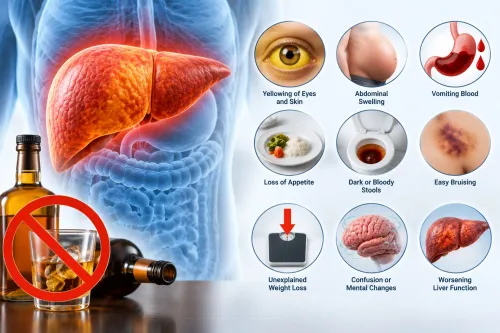
Symptoms may be absent or nonspecific.
A worker might experience:
- Fatigue
- Reduced appetite
- Nausea
- Abdominal discomfort
- Itching
- Jaundice
These symptoms can occur in many liver conditions.
A doctor therefore needs to consider the full exposure history rather than assuming every abnormal liver test is caused by fatty liver or alcohol.
What should an occupational history include?
During a liver consultation, useful questions include:
- What chemicals are handled?
- How often are they used?
- Is exposure through inhalation, skin contact, or ingestion?
- What protective equipment is used?
- Are workplace ventilation controls available?
- Has exposure increased recently?
- Are coworkers experiencing similar problems?
- When did abnormal liver tests begin?
- Are any medicines or supplements being used?
The timing of exposure and laboratory abnormalities can provide important clues.
What screening may involve
There is no single occupational liver screening test suitable for every worker.
Depending on the suspected exposure and medical history, evaluation may involve:
- Liver function tests
- Complete blood count
- Viral hepatitis testing
- Metabolic assessment
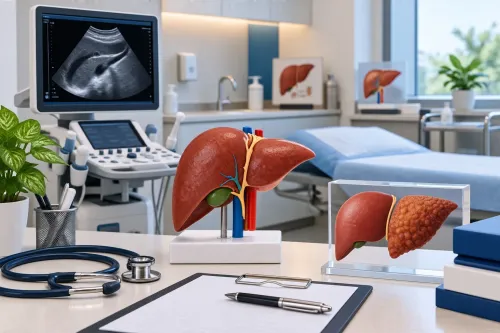
- Ultrasound
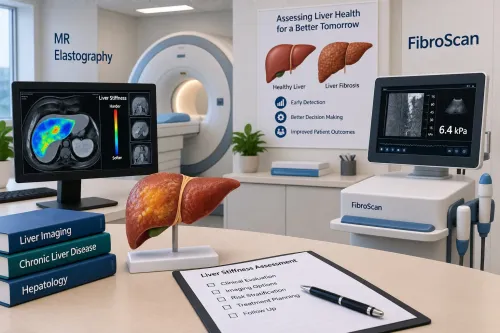
- Fibrosis assessment
- Additional disease-specific testing
Persistent abnormalities may require specialist hepatology evaluation.
Workplace exposure is not the only possible cause
A person exposed to chemicals may also have fatty liver, diabetes, hepatitis, alcohol-associated disease, or medication-related liver injury.
This is why diagnosis should not be based on exposure alone.
A complete clinical history helps determine whether the abnormality is more likely related to occupational exposure, another liver disease, or multiple contributing factors.
Prevention starts at the workplace
Reducing exposure is generally more useful than waiting for symptoms.
Employers and workers can focus on:
- Appropriate protective equipment
- Safe chemical handling
- Adequate ventilation
- Proper storage and labeling
- Exposure-control procedures
- Workplace training
- Appropriate occupational health monitoring
Workers should also report new symptoms or persistent abnormal health-test results rather than ignoring them.
When should a worker see a hepatologist?
Specialist assessment becomes particularly relevant when liver enzymes remain abnormal, imaging shows liver changes, fibrosis is suspected, or there is uncertainty about the cause of liver injury.
For workers and families in Mumbai, Dr. Chetan Kalal Hepatologist and Liver Transplant Specialist can evaluate abnormal liver findings in the context of occupational exposure and other potential risk factors.
The important point is that occupational liver disease should be considered as part of a broader diagnostic process. A workplace exposure does not automatically mean it caused liver damage, but ignoring a plausible exposure history can also delay the correct diagnosis.
Good occupational liver health combines safer workplace practices, appropriate medical monitoring, early investigation of abnormal results, and specialist evaluation when persistent liver abnormalities require deeper assessment.
Keywords